Guide · 1 designs
Japanese Kanji Tattoos: Real Characters, Their Meanings, and How Not to Get a Fake One
A kanji tattoo uses one or more of the Chinese-derived characters in Japanese writing. Popular choices include 愛 (ai, love), 力 (chikara, strength), 勇気 (yūki, courage), 希望 (kibō, hope), 家族 (kazoku, family) and 平和 (heiwa, peace). Before getting one, have a native Japanese reader check the exact characters - many designs online, including AI-generated ones, show characters that do not exist.
IReal characters and what they mean
- 愛 - ai - love
- 力 - chikara - strength, power
- 勇気 - yūki - courage
- 希望 - kibō - hope
- 家族 - kazoku - family
- 平和 - heiwa - peace
- 自由 - jiyū - freedom
- 夢 - yume - dream
- 命 - inochi - life
- 忍耐 - nintai - perseverance, endurance
- 東 - higashi - east
Single characters often carry several meanings depending on the word they appear in, so a one-character tattoo can read differently to a Japanese speaker than you expect. Two-character words (like 勇気) are usually clearer.
IIA single character, done right
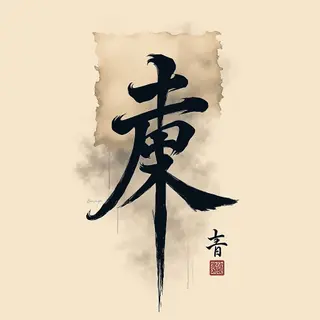
Brush-style lettering looks best when it copies real calligraphy: thick-to-thin strokes in the correct order and proportions.
IIIWhy so many kanji tattoos are wrong
Japanese has thousands of characters, and small differences change everything: one extra stroke can turn a word into another or into nothing. Internet image searches and AI image generators often produce characters that look Japanese but do not exist - a problem you can see on many tattoo idea pages, including in this site's own image library. A few rules protect you:
- Get the characters from a real source (a dictionary, a teacher), not from a picture.
- Ask a native speaker to read the final stencil, not just the idea.
- Keep the artist's lettering faithful to standard stroke shapes; do not let it be "stylised" past recognition.
- For your name, Japanese uses katakana (the phonetic script for foreign words), not kanji.
Kanji came from Chinese characters, and many are shared - but modern Chinese often uses simplified forms and some words differ. A kanji tattoo is not automatically correct Chinese, and the reverse.
IVQuestions people ask
What is the kanji for strength?
力 (chikara). For inner strength or courage, 勇気 (yūki) is often a better choice.
Can I write my name in kanji?
Japanese normally writes foreign names in katakana. Picking kanji by sound produces a string of characters with unintended meanings.
Are kanji and Chinese characters the same?
They share an origin and many characters, but forms and meanings sometimes differ, especially with simplified Chinese. Check with a speaker of the language you mean.