Guide · 14 designs
Japanese Mask Tattoo Meaning: Hannya, Oni, Kitsune and Samurai Masks
The hannya is a mask from Noh theatre showing a woman transformed into a demon by jealousy and grief; as a tattoo it stands for strong emotion and is often worn as protection against bad luck. The oni is a demon or ogre from Japanese folklore - brute force and, in tattoos, protection or punishment of evil. The kitsune (fox) mask stands for cunning and the spirit world, and a samurai mask for the warrior's discipline.
IMask by mask
Hannya
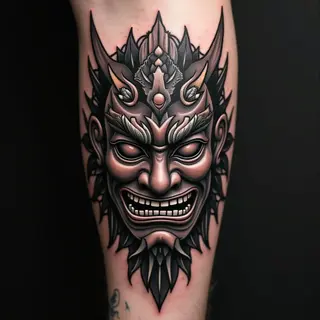
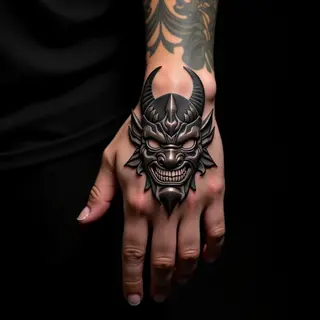
Recognise it by the two horns, the wide open mouth with fangs, and the eyes that look both furious and sad - the mask is designed to look tormented from one angle and grieving from another. In Noh, the colour tells you who she was: a white hannya plays a woman of high birth, a red one a lower-born woman, and a dark red one a true demon.
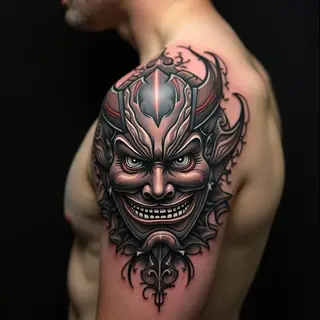 AI-generated
traditionalJapanese Hannya Mask Tattoo Designs: Meaning & InspirationA dark hannya on the shoulder with long horns - from the site's most visited mask page.
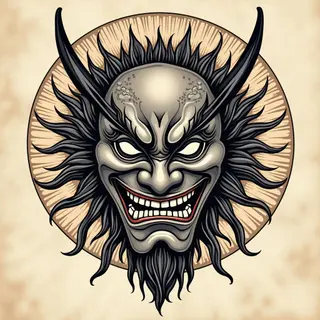 AI-generated
illustrativeUnveiling the Meaning of Japanese Mask Tattoos: A Cultural GuideA pale hannya on a gold disc, the classic flash composition.
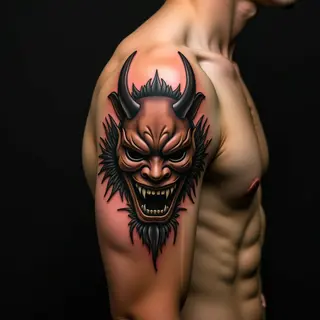 AI-generated
Geometric Oni Mask Tattoos: Fierce Designs & MeaningA hannya on the outer shoulder in black and grey.
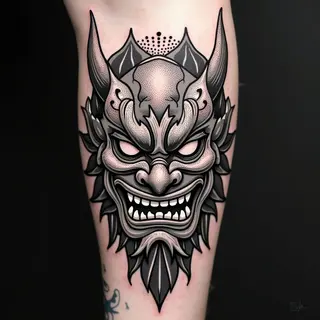 AI-generated
illustrativeUnlocking the Meaning: Oni Mask Tattoos - A Guide to Japanese Folklore & SymbolismAn elongated hannya down the forearm, very black.
 AI-generated
traditionalUnveiling the Symbolism of Japanese Mask Tattoos: Meaning & InspirationA hannya with an ornate crown in fine black and grey.
 AI-generated
tribal · handTiny Japanese Demon Mask Tattoos for Your HandA small hannya on the back of the hand.
Oni
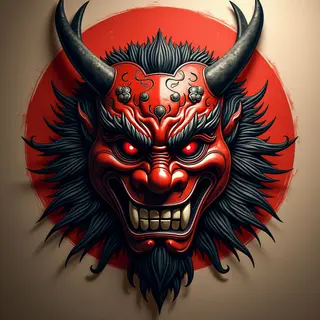
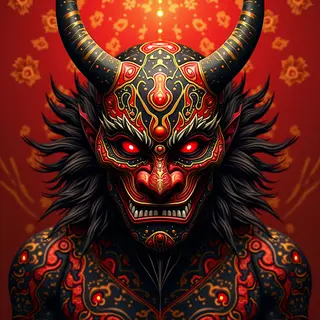
Oni are the ogres of folklore: horned, fanged, often red or blue, carrying an iron club. Every February at Setsubun, families throw beans to drive them out of the house. In a tattoo, an oni is power - often turned outward to keep worse things away.
 AI-generated
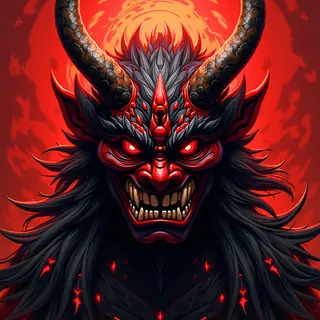
japaneseJapanese Demon Mask Tattoo Designs: A Guide to Oni ArtA red oni against a red sun, full colour.
 AI-generated
illustrative · forearmUnleash Your Inner Demon: Oni Mask Tattoo Ideas & MeaningsA red-and-gold oni with heavy ornament.
 AI-generated
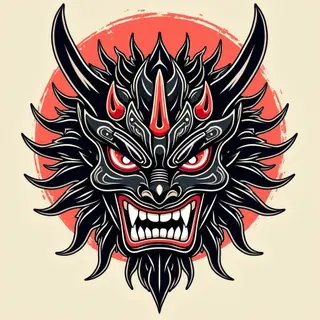
old-school · backDecoding Oni Mask Tattoos: Meanings, Symbolism & Design IdeasA black oni with red accents, flash style.
 AI-generated
japanese · armJapanese Oni Mask Tattoo Designs: Meaning, Inspiration & Placement
Kitsune and other spirits
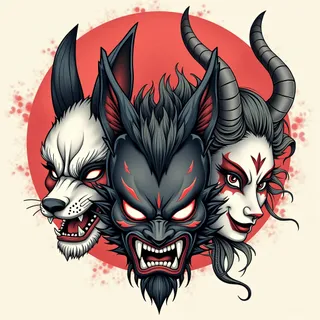
The fox mask belongs to kitsune, clever shape-shifting spirits linked to the shrines of Inari. Masks are often grouped to show several faces of one story.
Samurai masks
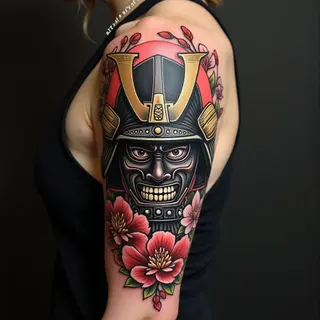
The menpo, a samurai's iron face guard, was often shaped like a snarling face to frighten opponents. As a tattoo it stands for discipline, honour and courage.
 AI-generated
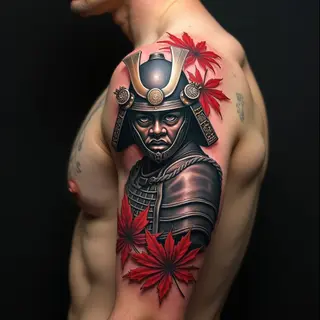
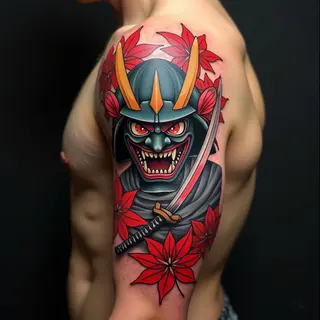
armIntricate Hannya Mask and Samurai Armor TattooA samurai in armour and helmet on the upper arm with red maple leaves.
 AI-generated
armIntricate Samurai Mask Tattoo in Traditional Japanese StyleA samurai helmet and mask framed by cherry blossom.
 AI-generated
armIntense Oni Samurai Tattoo in Traditional Irezumi StyleA green-faced samurai mask with a sword and red leaves.
IIMasks in a larger Japanese piece
In traditional Japanese tattooing a mask is usually one element of a sleeve or back piece, surrounded by wind bars, waves, clouds and seasonal flowers - maple leaves, peonies or cherry blossom. The background matters: it ties the mask into the body's flow and keeps it from looking like a sticker. If you plan to extend to a sleeve later, tell your artist before the first session.
IIIQuestions people ask
What is the difference between hannya and oni?
A hannya is a theatre mask of a woman turned demon by jealousy - horns, fangs, sorrowful eyes. An oni is a folklore ogre, usually a full monster face with a broader, brutish look and often a club.
Is a hannya tattoo bad luck?
No - it is usually worn as protection, a demon facing outward to keep evil away.