Covering up a chest tattoo can be tricky, but it’s also incredibly rewarding. It's not just about slapping on new ink; it requires careful planning and finding the right artistic approach. This guide breaks down various styles and techniques specifically for men who want to hide older or unwanted tattoos.
Understanding the Challenges
Chest tattoos present unique hurdles. They're often large and detailed, which makes cover-ups more complex. The existing tattoo’s density, how saturated the colors are, and its exact placement all play a role in whether a new design will work well.
Seriously, finding an artist with experience in cover-up work is essential—they'll know what to look for.
Popular Cover Up Styles
Let’s explore some styles that often deliver great results:
-
Traditional/Americana
Bold lines, classic imagery like anchors or eagles, and a limited color palette can effectively hide faded or less detailed tattoos. The contrast is key here. -
Geometric
Intricate patterns, sometimes drawing from Islamic geometric designs, create a visual complexity that really masks the original tattoo. The precision involved allows for a surprisingly seamless integration. -
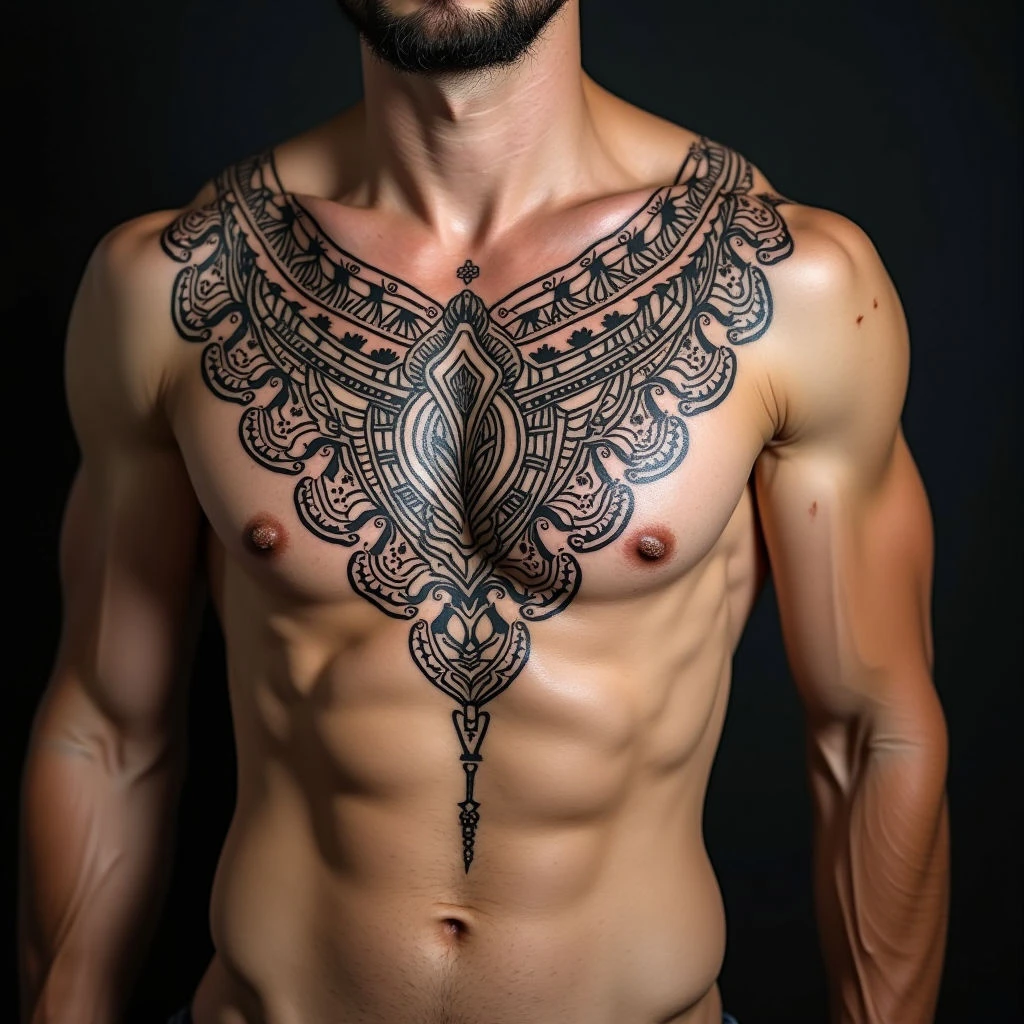
Blackwork
Solid black ink provides a powerful backdrop, effectively covering up lighter colors or busy imagery. It’s a strong choice. -
Realism (with caveats)
Realistic portraits or landscapes can work, but only if you’re working with an exceptionally skilled artist who truly understands skin and shading. It's a challenging approach.
Essential Considerations
1.
Consultation
A thorough consultation with a reputable tattoo artist is absolutely crucial. They’ll assess your existing tattoo and recommend the best styles and placement. 2.
Design Complexity
Generally, more complex designs are better for cover-ups—they offer more visual distraction. Think layers and intricate details. 3.
Color Theory
Darker colors, like black, navy blue, or deep red, generally work best to cover lighter colors. It’s a simple principle with a big impact. 4.
Placement
Consider the natural curves and contours of your chest and torso when planning where the new design will go. It’ll affect how it looks. 5.
Healing & Aftercare
Follow your artist's aftercare instructions carefully—proper healing is key to getting the best possible results.