
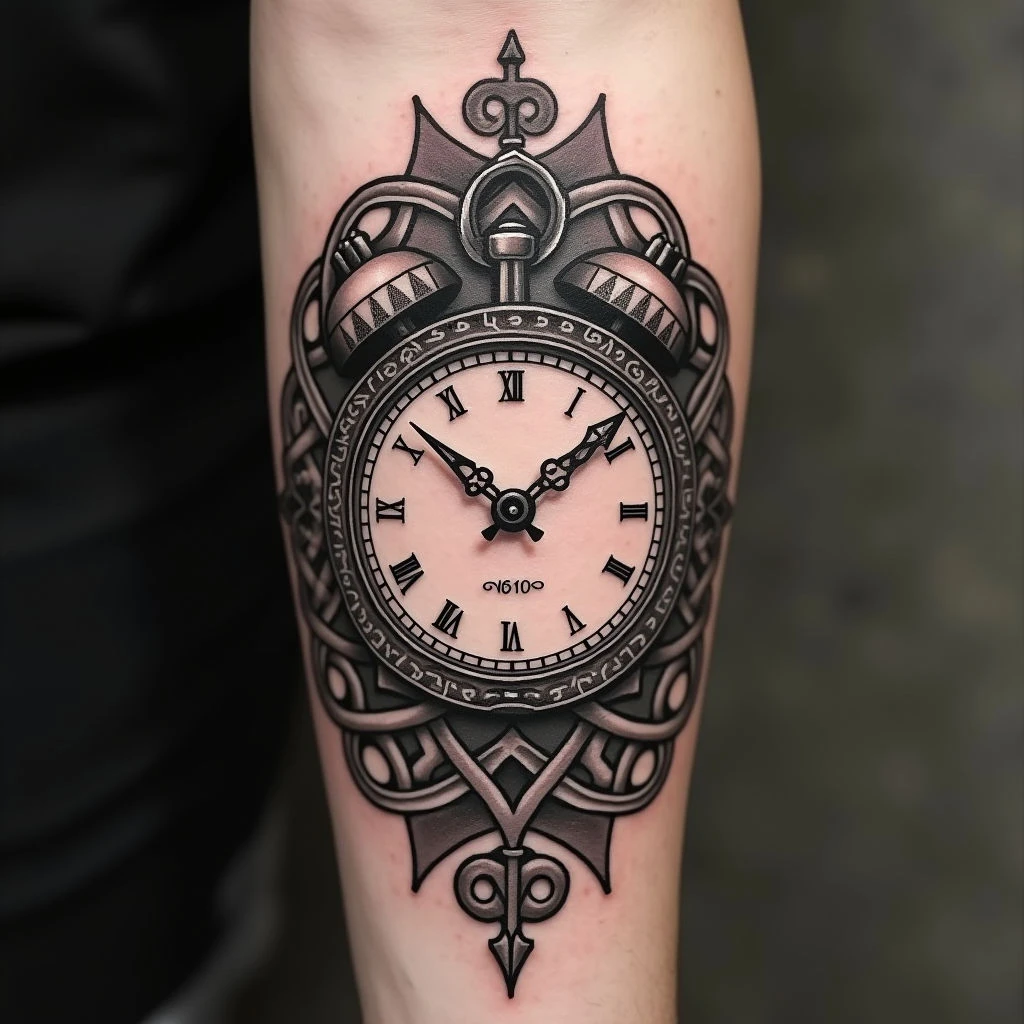
An image of a clock without hands is inherently symbolic—it evokes feelings of stagnation, reflection, and makes you question how we measure time. It’s a simple design, yet it holds layers of meaning that different cultures interpret in unique ways.
Common Interpretations
What does this imagery actually mean? Here are a few common interpretations:
- Time Standing Still: Often, it suggests time has stopped—a moment frozen in memory or the desire to escape the constant forward motion.
- Lost Opportunities: It can also symbolize missed chances and regrets, those moments that slipped away without action.
- A Different Perspective: A clock without hands encourages you to think about how we perceive time and its value. It challenges the pressures of productivity and deadlines we often feel.
- The Illusion of Control: Some see it as a reminder that while we try to manage our lives, true control over time is ultimately an illusion.
Celtic Interpretation & Ancient Symbolism
Traditional Celtic culture didn’t emphasize linear time as much as cyclical patterns found in nature. Clocks are a relatively modern invention, so you wouldn't find them in traditional Celtic society. However, similar symbolism appears in ancient depictions of standing stones and weathered ruins—markers that acknowledge the passage of eras while also evoking a sense of timelessness.
A clock without hands could represent:
- Eternal Cycles: The design can symbolize the continuous flow of life, death, and rebirth—a core belief in Celtic spirituality.
- The Power of Memory: It marks important moments that remain frozen in time.
- Connection to Ancestors: A reminder of those who came before and whose legacies endure beyond a simple timeline.
If you’re considering getting this design as a tattoo, a skilled artist can incorporate Celtic knots or spirals for added symbolic depth—referencing eternity and interconnectedness. They could even cleverly integrate Ogham script to include a personalized message about time or remembrance.