


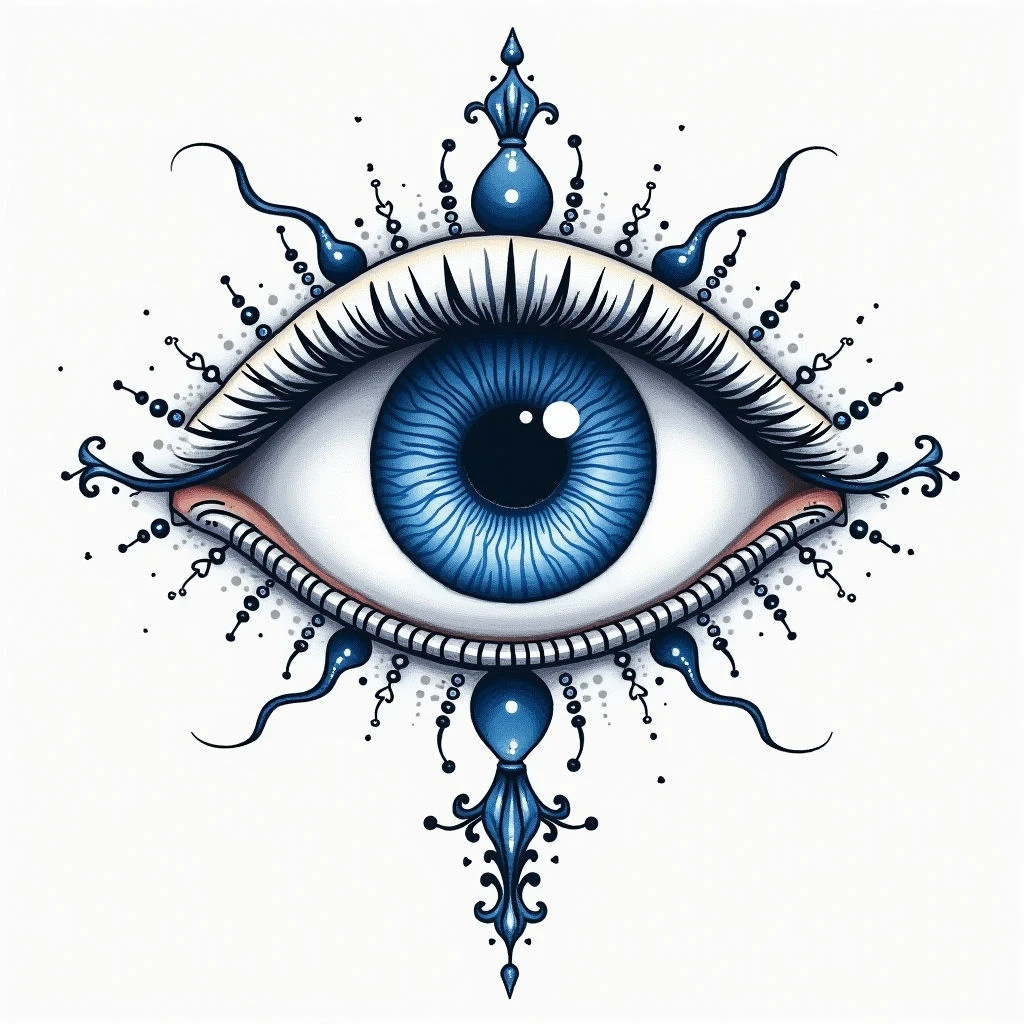
Design Variations: Evil eye tattoos come in countless designs, each carrying subtle nuances in meaning. Classic Nazar Boncuğu: The traditional Turkish bead design—a blue eye with a white center—is the most common choice. Eye with Hand of Fatima: Combining the evil eye with the Hand of Fatima (Hamsa) amplifies protection and blessings. Geometric Designs: Incorporating geometric patterns adds a modern twist while maintaining the protective symbolism. Realism: Some opt for realistic depictions of eyes, often incorporating intricate details. Placement Options: The placement of an evil eye tattoo can also influence its perceived power and meaning. Wrist: A popular choice for visibility and easy access to feel the symbol's energy. Ankle: Often associated with grounding and stability. Neck: A prominent location symbolizing openness and vulnerability. Behind the Ear: A discreet placement offering subtle protection.
Understanding the Evil Eye Tattoo: History, Meaning & Design
Introduction
The evil eye tattoo is a popular choice worldwide, steeped in ancient traditions and brimming with symbolic meaning. More than just an aesthetic addition, it represents protection against negative energy, bad luck, and ill intentions. This guide delves into the history, meanings, design variations, and placement options for this powerful symbol.
History & Origins
The belief in the evil eye dates back thousands of years to ancient civilizations like Mesopotamia, Greece, Rome, and Turkey. It was initially a source of envy and malice from others, thought to be capable of causing harm. To combat this, protective amulets and symbols were created—the most recognizable being the ‘nazar boncuğu’ (Turkish evil eye bead).
Symbolism & Meaning
The core meaning of an evil eye tattoo revolves around warding off negativity and attracting good fortune. It's a personal shield against envy and malice.
- Protection: The primary function is to deflect negative energy and safeguard the wearer from harm.
- Good Luck: Often associated with bringing prosperity, happiness, and overall well-being.
- Positive Energy: Represents attracting positive influences into one's life.
- Cultural Significance: It holds deep cultural roots, particularly in Mediterranean and Middle Eastern cultures.
Design Variations
Evil eye tattoos come in countless designs, each carrying subtle nuances in meaning.
- Classic Nazar Boncuğu: The traditional Turkish bead design—a blue eye with a white center—is the most common choice.
- Eye with Hand of Fatima: Combining the evil eye with the Hand of Fatima (Hamsa) amplifies protection and blessings.
- Geometric Designs: Incorporating geometric patterns adds a modern twist while maintaining the protective symbolism.
- Realism: Some opt for realistic depictions of eyes, often incorporating intricate details.
Placement Options
The placement of an evil eye tattoo can also influence its perceived power and meaning.
- Wrist: A popular choice for visibility and easy access to feel the symbol's energy.
- Ankle: Often associated with grounding and stability.
- Neck: A prominent location symbolizing openness and vulnerability.
- Behind the Ear: A discreet placement offering subtle protection.