
Henna tattoos are more than just beautiful artwork—they’re a direct link to centuries of tradition. Originating in South Asian cultures, these designs were initially integral to celebratory rituals like weddings, births, and festivals. Today, they've been beautifully reimagined as permanent body art, retaining their spiritual significance while embracing a modern aesthetic.
The Artistry Behind the Designs
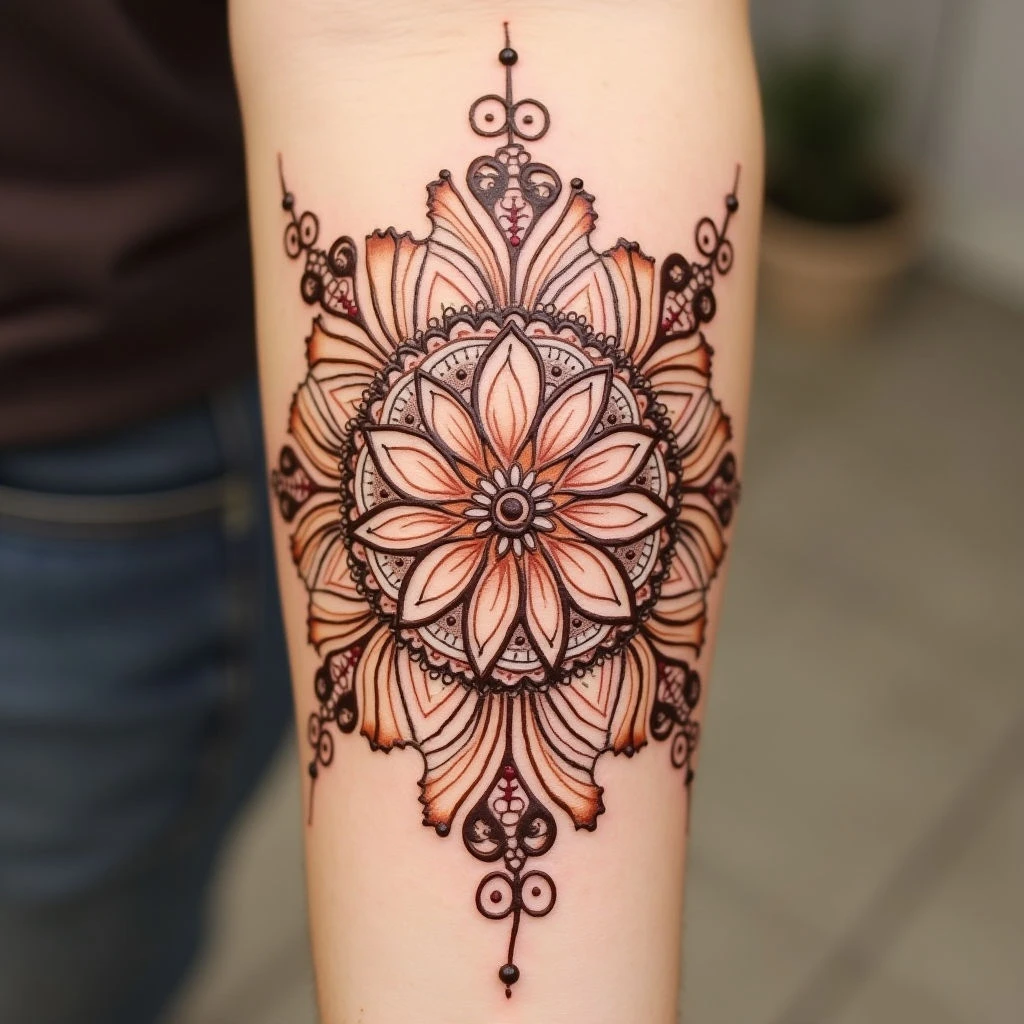
What truly sets henna tattoos apart is their intricate detail. Unlike many tattoo styles, henna emphasizes flowing lines and delicate curves—often incorporating complex geometric shapes. You’ll frequently see mandala designs symbolizing wholeness, lotus flowers representing purity and enlightenment, and Sanskrit calligraphy conveying blessings or mantras.
The color palette is typically warm: think deep browns, rich reds, and earthy tones—all derived from the natural pigments of the henna plant. This creates a soft, organic look that feels distinct from bolder tattoo styles.
Deep Cultural Significance
Beyond their visual appeal, henna tattoos carry deep cultural meaning. They’re often seen as symbols of good luck, protection, and fertility—powerful intentions woven into the design.
The application itself is considered a sacred ritual, performed with reverence and intention. It's more than just an artistic process; it's a connection to heritage.
Caring for Your Henna Tattoo
To preserve the vibrancy and longevity of your henna tattoo, proper aftercare is essential. Keep the area clean, moisturized, and shielded from direct sunlight—a little attention goes a long way.