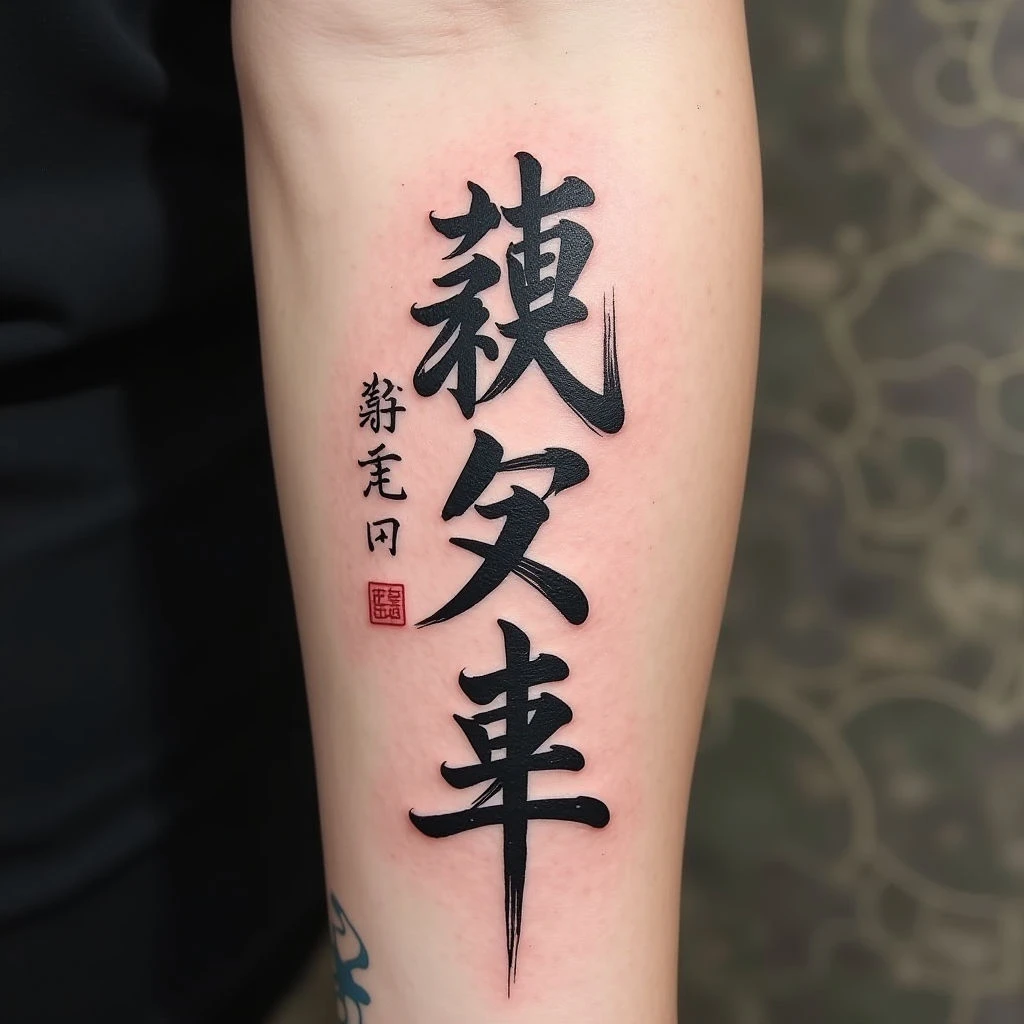
The beauty and complexity of the Japanese language extend far beyond simple words. Kanji characters, often borrowed from Chinese, carry layers of meaning and symbolism that make them incredibly popular choices for tattoos. But choosing a kanji tattoo requires more than just picking a visually appealing character – it’s about understanding its significance and ensuring accurate representation.
Understanding Kanji: More Than Just Words
Kanji aren't simply letters; they are ideograms, meaning each character often represents an entire concept or idea. This depth makes them incredibly versatile for tattoos, allowing you to express complex emotions, philosophies, or aspirations.
Popular Kanji Tattoo Designs & Their Meanings:
- Strength (力 - Chikara): A powerful symbol representing inner strength and resilience.
- Love (愛 - Ai): Expressing deep affection and connection. Often paired with other characters for nuanced meanings.
- Dream (夢 - Yume): Represents hopes, ambitions, and the pursuit of one’s goals.
- Peace (平和 - Heiwa): A symbol of tranquility and harmony – often sought after in times of chaos.
- Courage (勇気 - Yuuki): Represents bravery, determination, and facing challenges head-on.
Styles & Aesthetics:
- Traditional Japanese (Irezumi): Bold lines, vibrant colors, often incorporated into larger designs.
- Minimalist: Clean, simple kanji with a focus on the character’s form – perfect for subtle expression.
- Neo-Traditional: Combining classic kanji aesthetics with modern design elements.
- Blackwork: Utilizing solid black ink to create striking and impactful kanji tattoos.
Placement Considerations:
Kanji are typically placed on the arm, back, leg, or chest. The size of the character should be proportional to the placement area – larger characters for broader areas like the back and smaller ones for more discreet placements.
Important Note: Accuracy is Key!
Always consult with a knowledgeable tattoo artist experienced in Japanese calligraphy to ensure your chosen kanji are rendered correctly and convey the intended meaning. Incorrectly translated or drawn kanji can lead to unintended meanings - avoid this at all cost!