

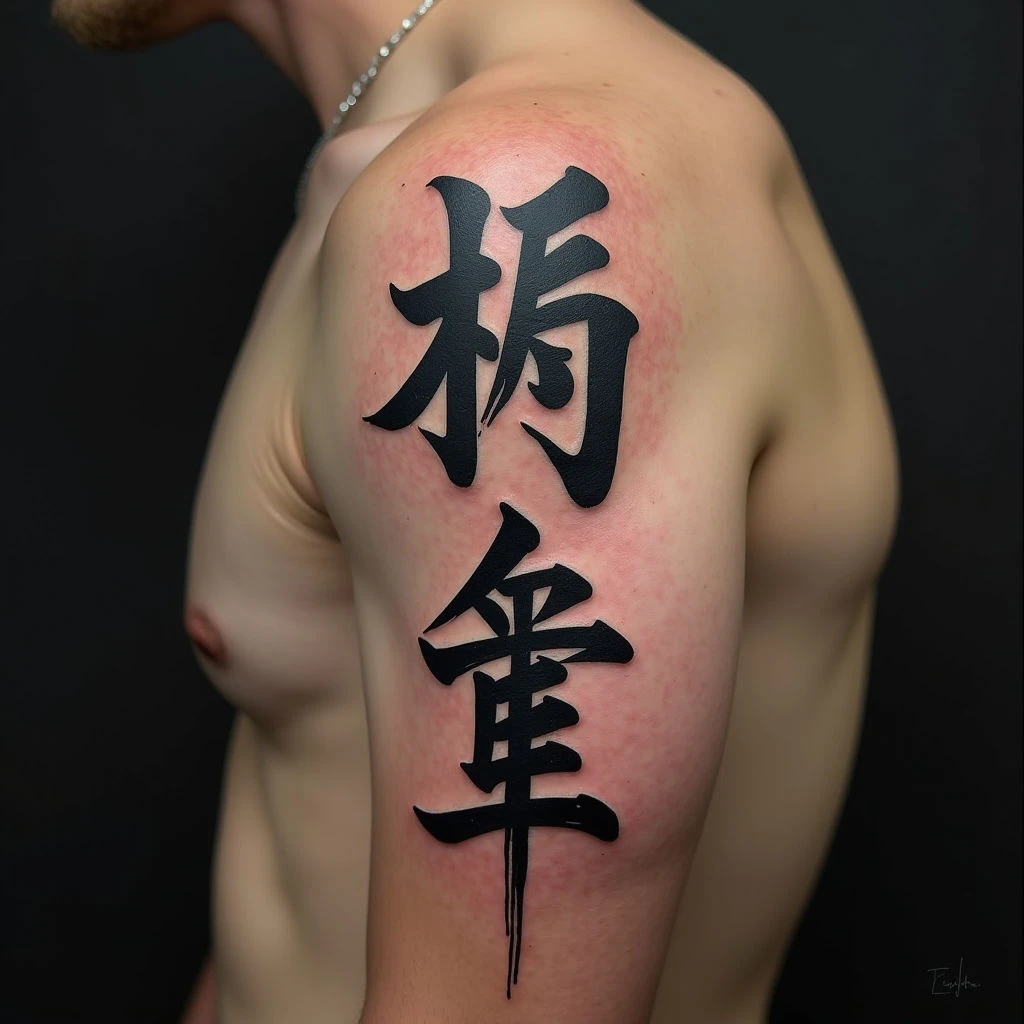
Japanese letter tattoos are gaining popularity—they’re a beautiful way to express yourself with elegance and symbolism. Unlike Western alphabets, the Japanese writing systems – Kanji, Hiragana, and Katakana – each have unique meanings and aesthetics.
Understanding the Writing Systems
Choosing the right characters is essential for a tattoo that’s both culturally respectful and personally meaningful. Let's break down the basics.
Kanji
These are adopted Chinese characters, each representing a whole word or concept. They carry significant historical and philosophical weight—a single Kanji can convey complex ideas like strength, beauty, or wisdom.
Hiragana
This is a phonetic script used for native Japanese words and grammatical particles. It’s known for its soft, flowing appearance—visually quite distinct.
Katakana
Primarily used for foreign loanwords and onomatopoeia, Katakana often appears more angular and structured than Hiragana.
Design Inspiration & Meanings
Here are a few popular Japanese letter tattoo designs to get you started:
- 'Strength': Represented by the Kanji character 力 (chikara).
- 'Beauty': Expressed through 美 (bi).
- 'Dream': Can be symbolized with 夢 (yume).
- 'Love': A frequently sought symbol, often rendered with 愛 (ai).
Artistic Styles
Japanese letter tattoos can be incorporated into a wide range of artistic styles.
- Traditional Japanese: Think bold lines and classic motifs like cherry blossoms or dragons.
- Minimalist: Clean fonts and simple placement create subtle elegance.
- Watercolor: Blending colors adds a soft, artistic impression.
Important Considerations
Before you commit to an ink design, keep these points in mind.
- Accuracy is Key: A misinterpreted Kanji can lead to unintended meanings—always consult with a knowledgeable artist or translator.
- Cultural Sensitivity: Research the significance of your chosen characters and make sure they align with your intentions. It’s about respect, not just aesthetics.
- Font Selection: The font choice significantly impacts the overall look; choose one that complements your design—it's a small detail that makes a big difference.