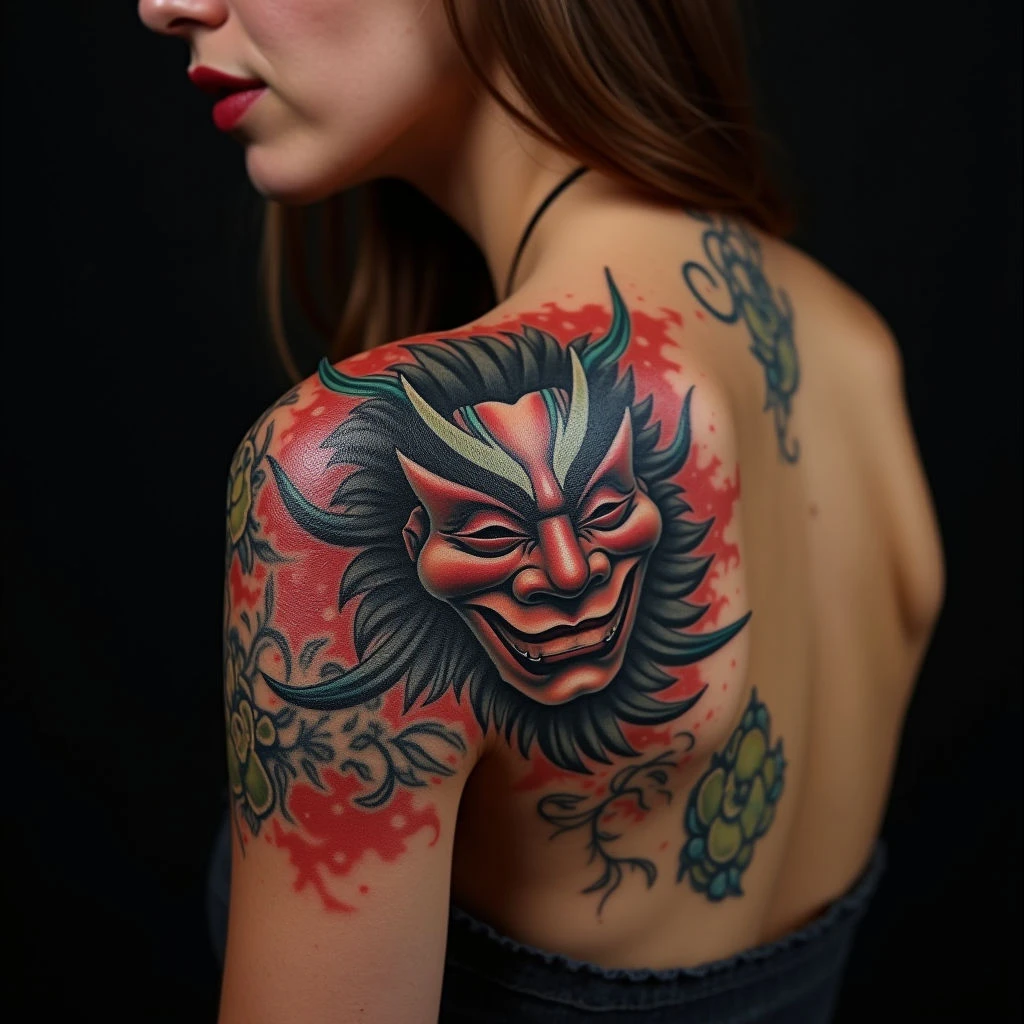
Japanese mask tattoos carry deep meaning, rooted in folklore, theater, and spiritual beliefs. For women especially, these designs often symbolize strength, personal transformation, or a connection to ancient traditions. Let's explore some common masks, their significance, and what to consider when choosing one.
Understanding Common Mask Tattoos
These iconic symbols offer a window into Japanese culture. Here's a breakdown of some popular choices:
Hannya: Embracing Inner Strength
The Hannya is a striking female demon, often representing jealousy, anger, and suppressed rage. Many women choose this design as a powerful statement—a way to reclaim their strength and overcome adversity.
Kitsune (Fox): Wisdom and Connection
Kitsune masks symbolize intelligence, cunning, and magical abilities. Foxes are revered as messengers of the deity Inari; a Kitsune mask can represent wisdom and a profound spiritual connection.
Tengu: Ambition and Discipline
These bird-like demons are associated with mountains, martial arts, and the pursuit of knowledge. A Tengu mask often signifies ambition, discipline, and the drive to overcome challenges.
Design Considerations for a Meaningful Tattoo
Placement is key when it comes to Japanese mask tattoos. Think about how the lines will flow with your body’s shape—it's more than just aesthetics; it's about creating harmony. Color choices also matter: traditional black ink projects strength, while softer hues can evoke gentleness or a sense of mystery.
Exploring Style Variations
While classic styles remain popular, modern artists are pushing boundaries. You'll find interpretations incorporating watercolor effects, dotwork shading, and neo-traditional flourishes—all adding unique character to these timeless symbols.