Kanji tattoos are more than just ink; they’re a glimpse into Japanese culture and philosophy. As a henna-fusion artist, I'm fascinated by how these symbols blend ancient traditions with modern design.
Understanding Kanji: More Than Just Characters
Kanji are Chinese characters adopted into the Japanese writing system. Each character carries deep meaning—representing concepts like strength, peace, or beauty. Choosing a Kanji tattoo is deeply personal, so research is essential to ensure it aligns with your intentions.
Popular Kanji Tattoo Designs & Meanings
-
Strength (力 - Chikara)
A classic choice symbolizing resilience and determination. It’s often depicted in bold, traditional styles. -
Peace (平和 - Heiwa)
Represents tranquility and harmony—a great choice for those seeking balance in their lives. -
Love (愛 - Ai)
A heartfelt symbol expressing affection and compassion. You can soften its appearance with watercolor techniques or incorporate it into a mandala design. -
Dream (夢 – Yume)
Symbolizes aspiration and the pursuit of your goals. -
Life (命 – Inochi)
A powerful reminder to appreciate life’s preciousness.
Design Styles: Traditional Meets Fusion
-
Traditional
Bold lines and stark black ink—ideal for conveying strength and clarity. -
Neo-Traditional
Adds depth with shading and nuanced colors. -
Watercolor
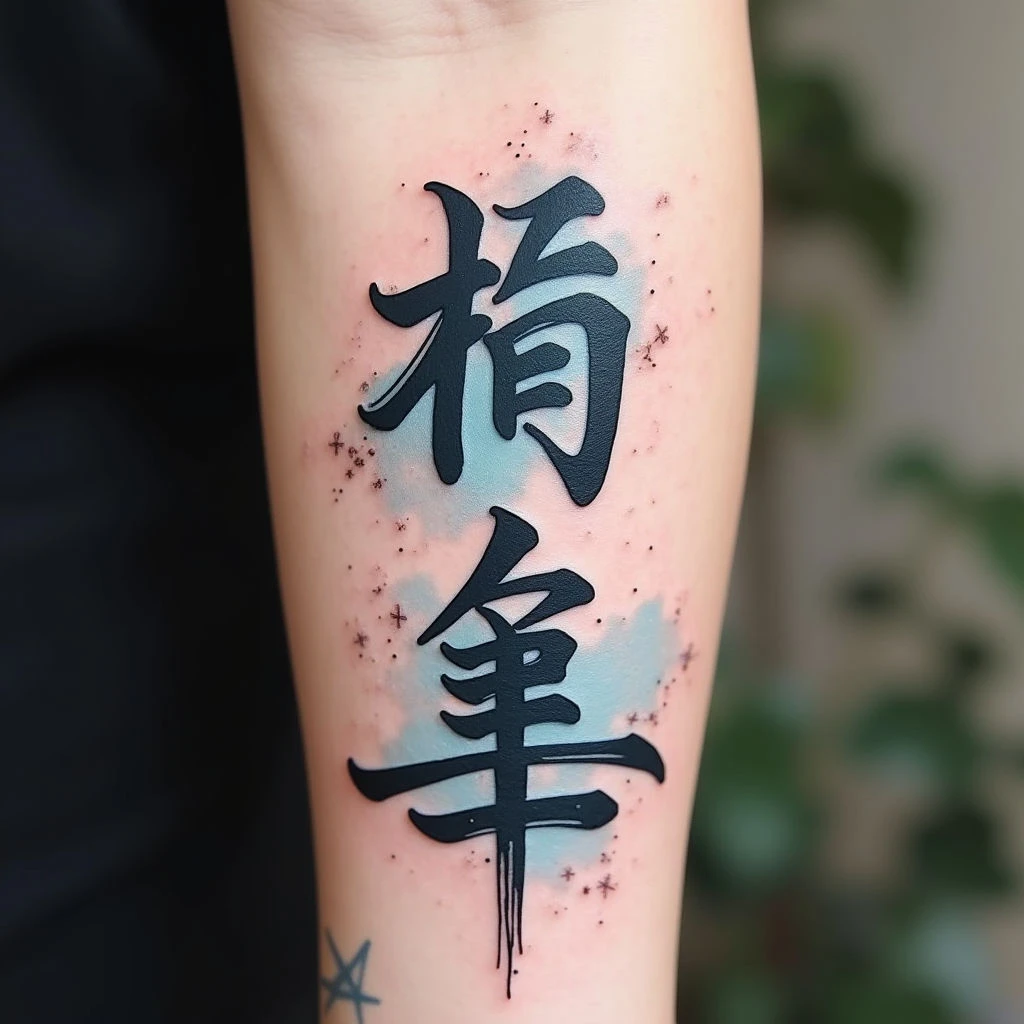
Creates a soft, ethereal effect—beautiful for Kanji representing gentleness or beauty. -
Dotwork/Line Work Fusion
Incorporates intricate dotwork patterns around the kanji characters to add complexity and visual interest.
Placement Considerations
The placement of your Kanji tattoo can also influence its meaning. For example, a symbol of strength on the upper arm signifies power, while a peace symbol on the wrist might represent a commitment to inner harmony.
Cultural Sensitivity
It’s important to be mindful of the cultural significance of Kanji. Avoid using characters with negative connotations or those tied to specific religious practices unless you have a thorough understanding.