The friendships we cherish are truly special – a connection built on laughter, support, and enduring love. Many choose tattoos to celebrate these bonds, but what if those designs could also carry the wisdom of generations past? Let’s explore small matching tattoo ideas inspired by the beautiful artistry of Aboriginal dot painting and Dreamtime narratives.
Understanding Dreamtime & Its Significance
Dreamtime, also known as Dreaming, is central to Aboriginal Australian culture. It's a complex system of beliefs encompassing creation stories, spirituality, and the interconnectedness of everything around us. These narratives explain how the land came to be, the origins of life, and the moral guidelines that shape society—often expressed through vibrant dot paintings passed down for countless generations.
Symbolic Choices for Your Matching Tattoos
Selecting symbols rooted in Aboriginal culture demands respect and understanding. Here are a few ideas, always to be discussed with an artist who truly understands the cultural significance:
Animals of the Dreamtime
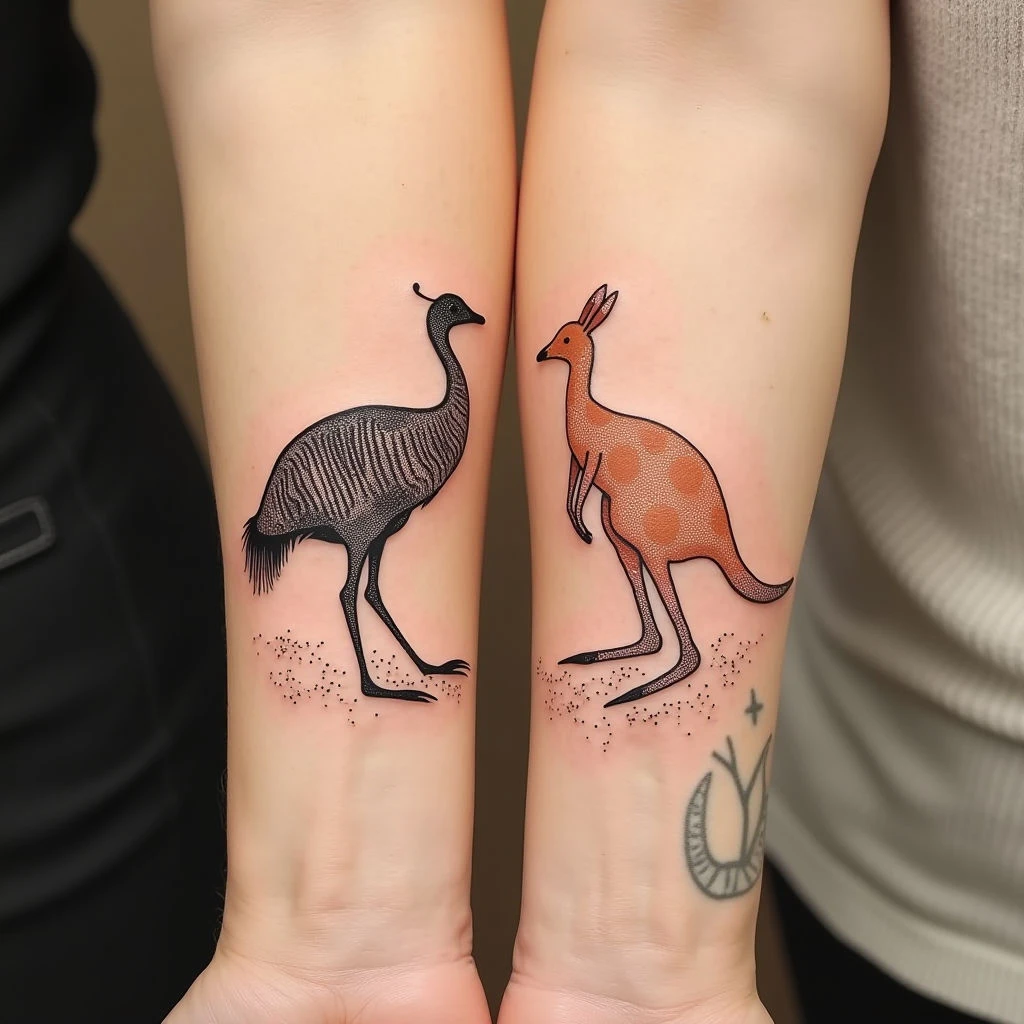
Consider animals like the Kangaroo (representing strength and motherhood), the Emu (a symbol of connection to the land), or the Koala (embodying peacefulness and adaptability). Each holds deep meaning within Aboriginal stories, and a matching pair could represent shared qualities or aspirations.
Dot Patterns Representing Connection
Simple dot patterns can symbolize kinship and unity. These designs are incredibly personal; an artist can create something that feels both meaningful and beautiful.
Yara Yuma (Two Sisters)
This symbol represents balance, harmony, and the strength of female relationships—a powerful choice for friends.
Respectful Appropriation & Cultural Sensitivity
It's absolutely vital to approach these symbols with the utmost respect. That means consulting a culturally knowledgeable tattoo artist, researching the meaning behind any symbol you choose, and avoiding designs that might trivialize or misrepresent Aboriginal culture.