
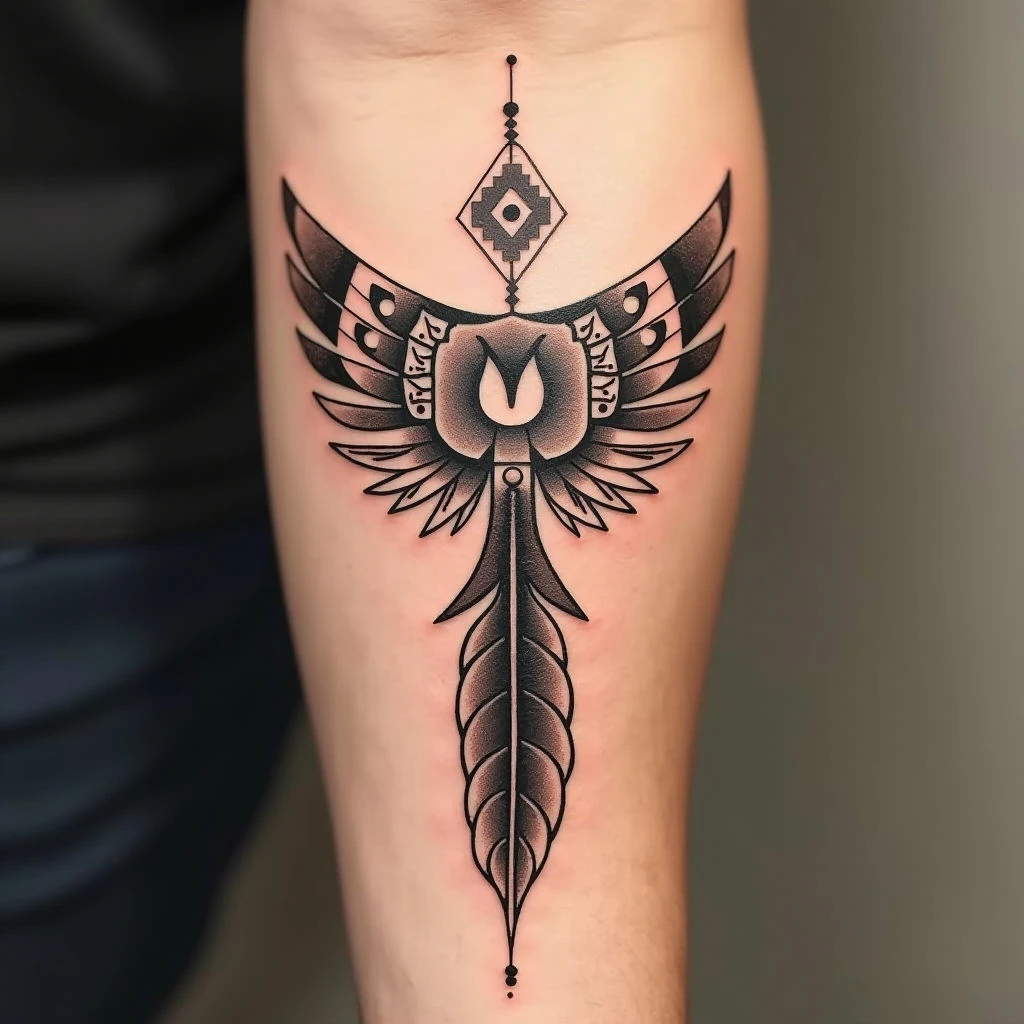
Truly appreciating body art means understanding its cultural significance. Small tattoos, for example, can be deeply personal ways to honor Native traditions—but only when done with genuine respect and accuracy.
Avoiding Disrespectful Imagery
Steer clear of trendy designs like feather headdresses or generic "tribal" patterns. These often feel like appropriations, lacking the depth and meaning they represent.
Understanding Symbolism
Instead of jumping to popular designs, take the time to research the specific symbolism used by each tribe. Every element tells a story.
Sacred Symbols: A Closer Look
Let's look at some common symbols and how to approach them with respect:
Eagle Feathers
For many tribes, eagle feathers symbolize courage, wisdom, and a profound spiritual connection. The number of feathers often indicates specific honors earned. If you're considering this symbol, it’s essential to seek guidance from tribal elders or knowledgeable sources.
Dreamcatchers
Originally created by the Ojibwe people to filter dreams, dreamcatchers have unfortunately become heavily commercialized. Acknowledge their origin and significance—use them with intention and knowledge, not just as decoration.
Medicine Wheels
Representing balance, harmony, and the interconnectedness of life, medicine wheels hold deep meaning. Before incorporating this powerful symbol, be sure to learn its specific tribal significance.
Tribal Patterns
These intricate patterns are visual languages passed down through generations. Don’t treat them as mere aesthetics; understand the story behind each pattern—it's a connection to heritage.