
Even within a small studio, you can create something truly special—a space that resonates with profound cultural meaning. Focusing on traditional Chinese art transforms a simple room into an inspiring haven for artistic expression.
The Foundation: Harmony and Ink Wash Aesthetics
The core principle is harmony. It's about carefully balancing light, shadow, and symbolism to create a sense of balance and flow. The design should capture the essence of ink wash paintings (shuǐmò)—those beautiful works known for their subtle gradients and spaciousness.
Symbolic Elements
Think about incorporating elements deeply rooted in Chinese culture. Bamboo, plum blossoms (méi guā), or orchids (lání) each carry significant meaning—they're more than just decorative touches.
The Dragon Motif and Calligraphy
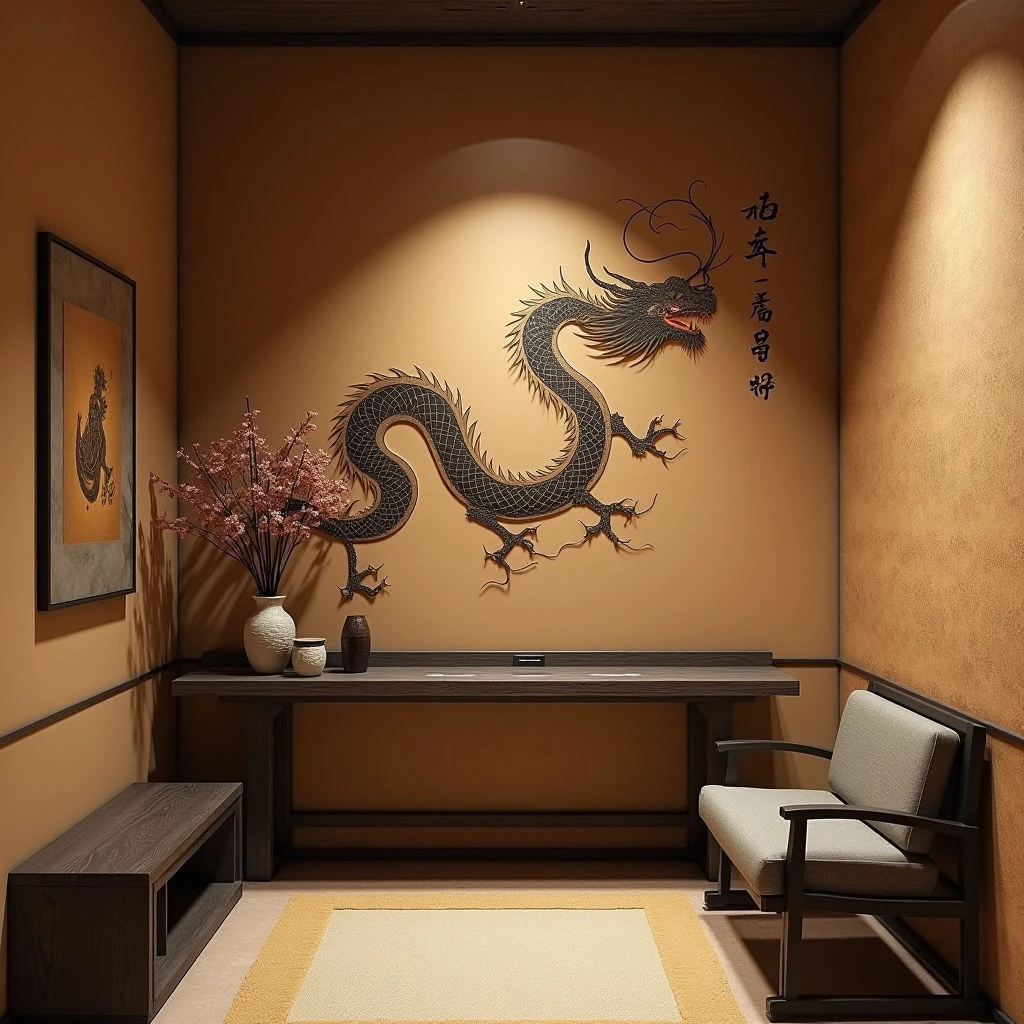
A flowing dragon motif (lóng) can become the studio’s focal point—a powerful symbol of wisdom and good fortune. It's vital to portray it respectfully, avoiding any simplification that might trivialize its cultural importance. The placement should guide the eye and create a sense of movement.
Calligraphy (shūfǎ) is another key element. Imagine meaningful phrases from ancient poets or philosophers adorning the walls—each stroke carries layers of meaning that contribute to the atmosphere. Working with a local calligraphy artist can ensure authenticity and cultural sensitivity.
Creating Tranquility and Reflection
The studio’s layout should prioritize tranquility and reflection. A small altar dedicated to traditional Chinese arts can be a wonderful addition—a place for quiet contemplation before or after creative sessions.
Finishing Touches
Finally, complete the ambiance with soft lighting, natural materials like wood and stone, and calming colors. Earth tones punctuated by accents of red or gold will create a truly inviting space.