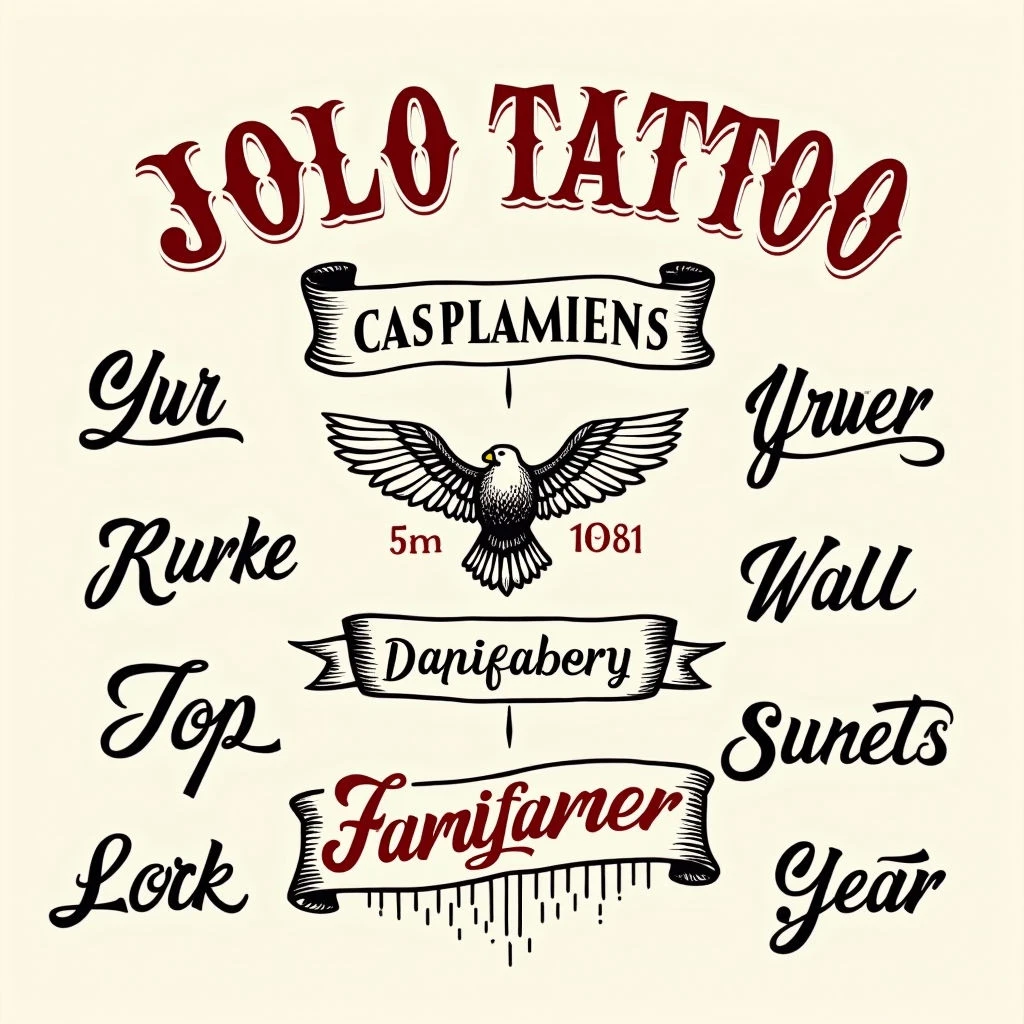
Tattoo lettering is so much more than just the imagery itself—it's a vital element with its own rich history. For decades, it’s been an integral part of traditional flash sheets, nautical designs, and deeply personal expressions.
A Look at Tattoo Lettering Styles
The evolution of tattoo lettering reflects shifts in cultural trends and artistic expression. Let's explore some key styles.
Traditional Banner Fonts
These bold, often rectangular or ribbon-like fonts were a staple of early American tattooing. They conveyed strength and purpose—perfect for names, dates, or short phrases. Sailor Jerry’s designs are an excellent example.
Script Lettering (Old English & Spencerian)
Elegant script lettering, inspired by 19th-century penmanship styles like Old English and Spencerian, brought a touch of sophistication to tattoos. You’d often see these used for heartfelt messages or romantic declarations.
Vintage Signage & Circus Fonts
The influence of vintage signage, circus posters, and advertising imagery is unmistakable in many classic tattoo fonts. They offered a playful, eye-catching aesthetic.
Block Letters
Simple and direct, block letters were used for readability and impact, often combined with other decorative elements.
Today, while modern lettering exists, the vintage aesthetics remain highly sought after—a testament to their enduring appeal. These fonts aren't just words; they’re pieces of history etched onto skin.