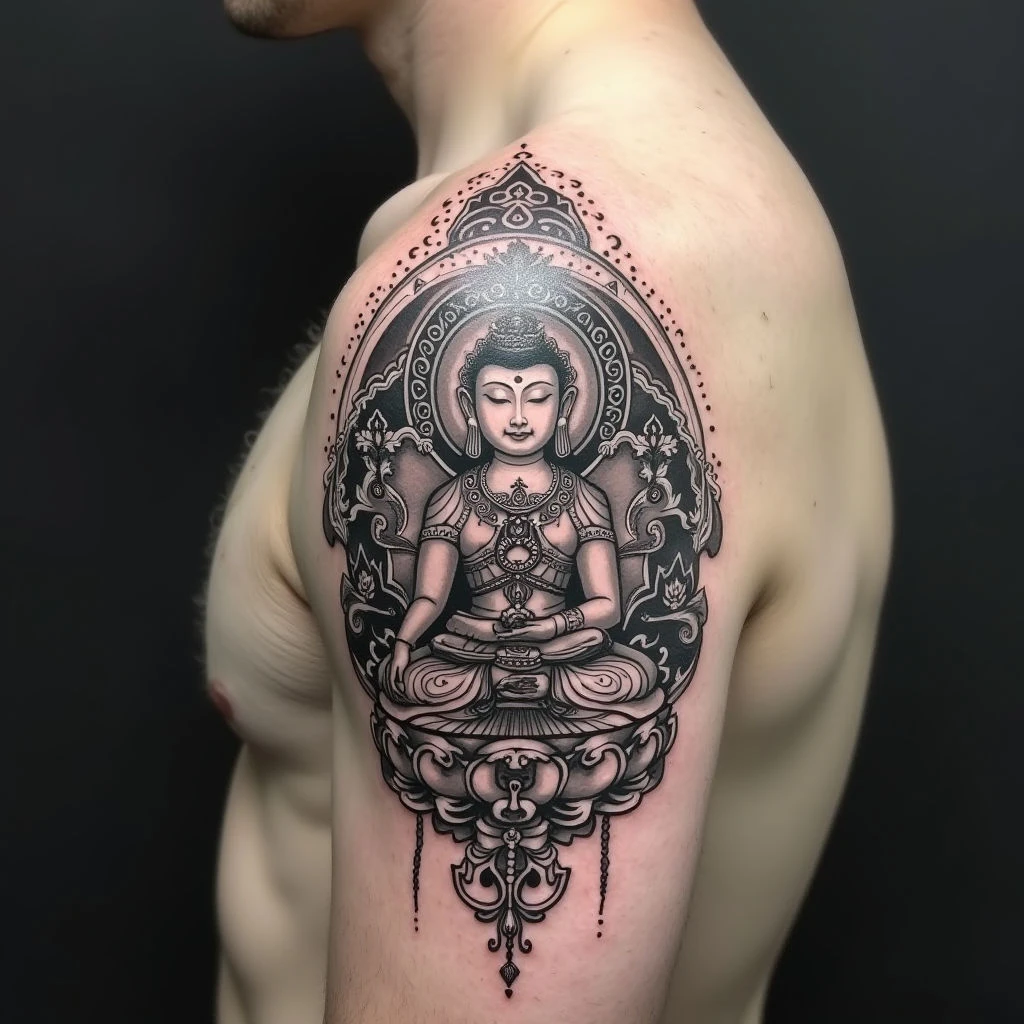
Tibetan symbols resonate with deep spiritual meaning within Buddhism. Many find these intricate designs beautiful, and they’re often incorporated into tattoos as personal expressions of faith, wisdom, and compassion.
Understanding Key Symbols
Let's explore some popular Tibetan tattoo symbols and what they represent. Choosing a symbol is more than just aesthetics; it’s about connecting with its significance.
Om Mani Padme Hum
Perhaps the most recognizable, this mantra embodies compassion and enlightenment. The six syllables aren't just words; they symbolize purification and transformation—a powerful choice for anyone seeking inner peace and a deeper understanding.
Dorje (Vajra)
The Dorje, or Vajra, represents strength, stability, and the unwavering nature of wisdom. You’ll often see it paired with other symbols, or used on its own as a striking design—it symbolizes skillful means to overcome obstacles on your spiritual journey.
Kalachakra
This complex mandala visually represents the cyclical nature of time and existence. It’s associated with profound teachings and significant spiritual advancement, making it a fitting choice for those committed to dedicated study and practice.
Eight Auspicious Symbols (Ashtamangala)
The Eight Auspicious Symbols—including the endless knot, victory banner, parasol, conch shell, treasure vase, lotus flower, fish pair, and Dharma wheel—are all about good fortune and prosperity. They’re frequently grouped together in tattoo designs to create a visually rich and meaningful piece.
Making Your Choice
When you're selecting a Tibetan symbol for a tattoo, really consider its meaning. It’s a sign of respect to understand the symbolism before making it permanent.
I always recommend consulting with an artist who understands the cultural significance—they can help guide you toward a design that truly resonates and is executed respectfully.