Guide · 22 designs
Celtic and Irish Tattoo Symbols: Knots, Crosses, Claddagh and Shamrocks
The main Celtic and Irish tattoo symbols are the Celtic cross (faith and heritage), the trinity knot or triquetra (three bound in one - the Christian Trinity, or three people), the Claddagh (love, friendship and loyalty), the shamrock (Ireland and luck) and endless knotwork (eternity and connection). Many specific knot meanings you see online are modern; the shapes themselves are centuries old.
ISymbol by symbol
The Celtic cross
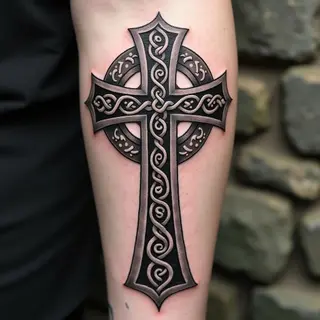
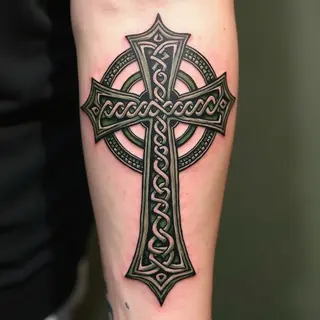
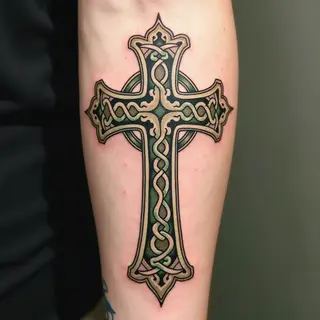
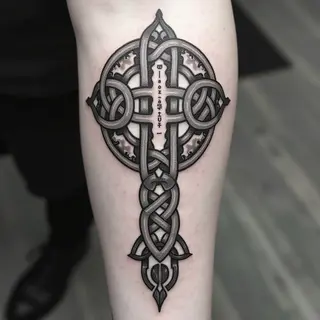
A cross with a ring around the intersection, carved on the great stone high crosses of early medieval Ireland. For most wearers it means faith, Irish heritage, or both.
 AI-generated
traditionalUnraveling the Meaning Behind Irish Celtic Cross TattoosA tall cross filled with knotwork, ring behind the arms - the classic form.
 AI-generated
traditionalUnlocking the Secrets: Irish Cross Tattoo Meanings & Design InspirationA broad cross with interlaced panels, solid enough to age well.
 AI-generated
traditionalCeltic Cross Tattoo Meaning for Guys: A Guide to Symbolism & DesignThe same shape with green fill for an Irish touch.
 AI-generated
traditionalIrish Gaelic Tattoos: Meanings, Designs & InspirationA cross set inside a knotwork circle.
Trinity knot and triquetra
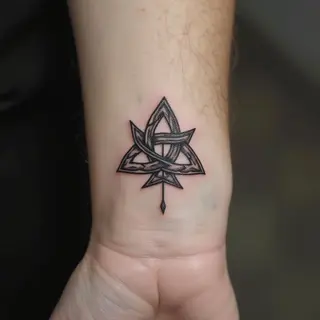
Three interlaced arcs drawn as one line. Christians read it as the Trinity; others as three people, three stages of life, or mind, body and spirit.
 AI-generated
traditionalSimple Tattoos With Deep Meaning: A Celtic & Irish GuideA small triquetra on the wrist - the simplest Celtic tattoo.
 AI-generated
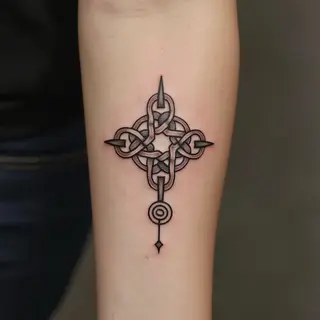
traditional · armSmall Tattoo Designs for Women's Arms: A Guide to Celtic & Irish SymbolismA knot cross with a dot below, fine line.
 AI-generated
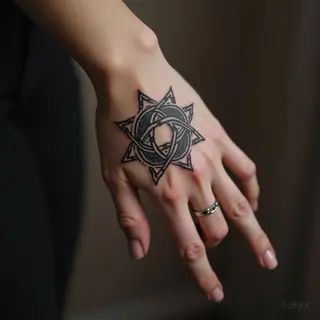
handDelicate Celtic Tattoos for Girls: Meaningful Hand DesignsA knotted star on the back of the hand.
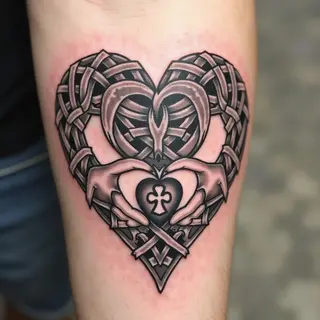
Claddagh
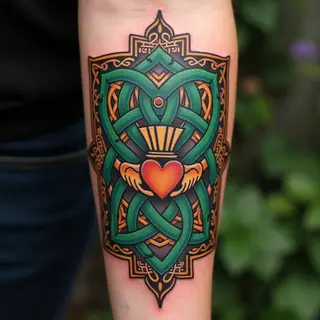
Two hands holding a crowned heart: hands for friendship, heart for love, crown for loyalty. It comes from the Claddagh ring of Galway and is often worn by couples and families.
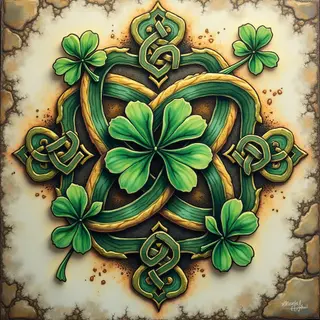
Shamrock
The three-leaf clover tied to St Patrick and to Ireland itself. A four-leaf clover is a luck symbol, not a shamrock.

Knotwork panels and bands
Interlace like that of the Book of Kells (around 800 AD) has no beginning and no end, which is why it is read as eternity and connection. Keep the spaces between strands generous: tight knotwork closes up as ink spreads.
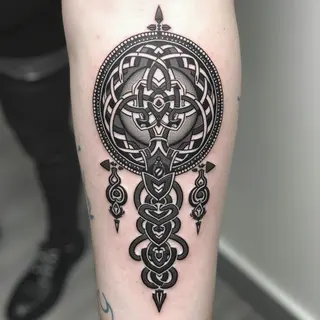 AI-generated
dotworkCeltic Symbol Tattoos: Exploring Their Deep MeaningsA knot medallion with hanging strands on the forearm.
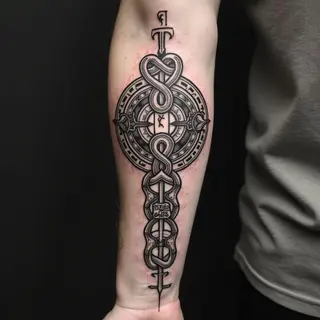 AI-generated
forearmCool Forearm Tattoo Designs for Men: A Guide to Celtic & Irish SymbolismA vertical chain of knots running down the forearm.
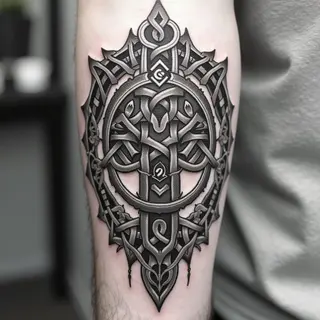 AI-generated
Best Tattoo Ideas for Men with Meaning: A Celtic & Irish GuideA dense knot shield on the upper arm.
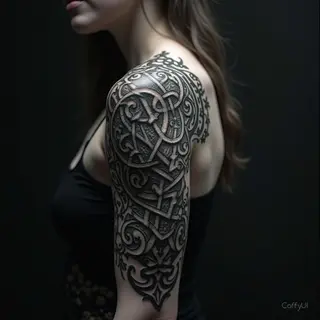 AI-generated
tribalUnveiling the Secrets: Irish Tribal Tattoo Meanings & DesignsA knotwork sleeve on the upper arm, woman's placement.
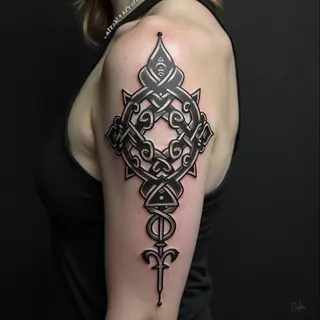 AI-generated
traditionalCeltic Symbols Tattoos: Meanings & Design InspirationA diamond-shaped panel on the upper arm.
 AI-generated
tribalCeltic Symbol Tattoos for Men: Meanings & DesignsKnotwork flowing over the shoulder.
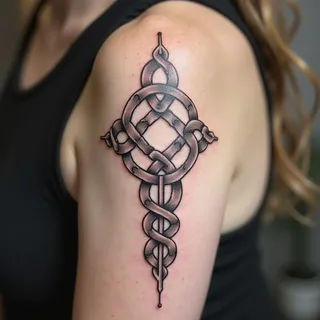 AI-generated
traditionalCeltic Knot Tattoo Ideas for Women: Symbolism & DesignsA long interlaced strand down the arm.
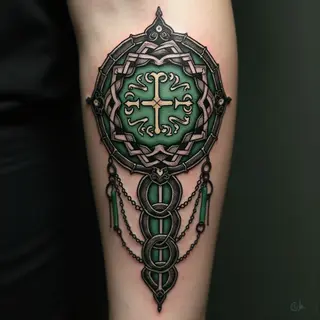 AI-generated
tribalNice Tattoos for Women: Meaningful Designs & InspirationA green knot circle with a cross at its centre.
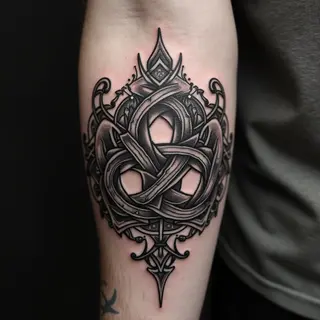 AI-generated
traditionalTattoo Designs for Men: Exploring Meaningful Celtic Motifs
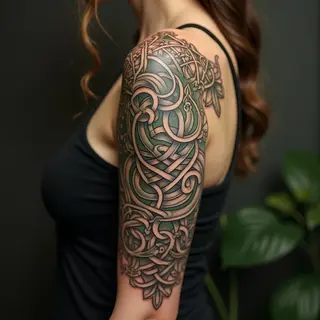 AI-generated
tribal · armUnique Tattoo Designs for Women's Arms: A Celtic Embrace
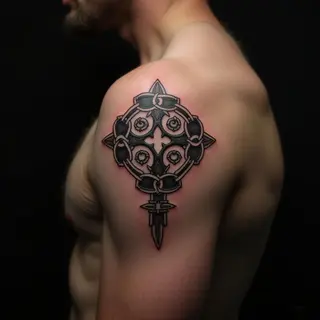 AI-generated
traditional · armSmall Tattoo Ideas for Father & Son: A Guide to Symbolic Bonds
IIOld shapes, newer meanings
The interlace patterns are genuinely ancient, but the early medieval monks who drew them did not leave a dictionary. Names such as the "Celtic motherhood knot" or the "Dara knot" are modern inventions built on the old style. That does not make them wrong to wear - it just means the meaning is yours to give, not something history fixed.
IIIQuestions people ask
What is the Celtic symbol for strength?
The Dara knot (from the Irish for oak) is the one usually sold as "strength", though it is a modern design. An oak tree or a triskele are older alternatives.
Is the Celtic cross a religious symbol?
It began as a Christian monument, and many wear it for faith. Others wear it for Irish or Scottish heritage.