Guide · 13 designs
Dragon Tattoo Meaning: Japanese Ryu, Chinese Long and How They Differ
In Japanese and Chinese tattooing the dragon is a benevolent, powerful water spirit: it stands for strength, wisdom, protection and good fortune. Chinese dragons (lóng) are also the emblem of the emperor and of luck; Japanese dragons (ryū) are tied to water, rain and the sea. Neither is the evil, fire-breathing dragon of European legend.
IJapanese dragons in irezumi
In a Japanese piece the dragon's long body follows the arm, leg or spine, surrounded by clouds, waves and seasonal flowers. The way the body wraps is more important than any single detail.
 AI-generated
traditionalJapanese Tattoos & Their Profound MeaningsA black dragon coiling around the upper arm through red peonies and a koi.
 AI-generated
old-school · backDecoding the Japanese Dragon Tattoo: Meaning & SymbolismA long black and grey dragon running the full arm.
 AI-generated
armMajestic Japanese Dragon Sleeve TattooA red-scaled dragon wrapping shoulder and arm.
 AI-generated
armIntricate Japanese Dragon and Koi Tattoo SleeveDark dragon with red flowers on the upper arm.
 AI-generated
traditionalUnderstanding Japanese Tattoos: A Guide to IrezumiA blue dragon against a red sun - the classic Japanese colour contrast.
 AI-generated
traditional · armChinese Themed Tattoos for Men: A Guide to Meaning & DesignA coloured dragon over the shoulder cap.
 AI-generated
forearmIntricate Dragon Irezumi on ForearmA slim dragon down the forearm in irezumi style.
 AI-generated
realism · kneeJapanese Dragon Tattoo on Knee: A Realism MasterpieceA dragon wrapping the knee with a red sun.
 AI-generated
Japanese Traditional Tattoo Flash Sheet: Dragons, Koi & MasksA flash sheet of Japanese dragons, koi and masks - useful for choosing a style.
IIChinese and ink-painting dragons
Chinese dragons are often shown with a flaming pearl - wisdom and prosperity - and drawn in the flowing style of ink painting.
 AI-generated
old-school · backUnveiling the Ancient Wisdom: Japanese Dragon Tattoo MeaningsA dragon in a full circle, grey wash like an ink painting.
 AI-generated
illustrativeDecoding Chinese Tattoos: Meanings, Symbolism & Design IdeasA vertical dragon with fine scales, drawn as a scroll.
 AI-generated
traditionalThe Enduring Majesty: Traditional Chinese Dragon Tattoos & Their SymbolismA black and grey dragon head with a cloud on the forearm.
 AI-generated
dotwork · handDecoding Japanese Tattoos: Meanings & SymbolismA coiled dragon across the back of the hand.
IIITelling them apart, and the koi that becomes a dragon
Claws. In Chinese art, five-clawed dragons were reserved for the emperor; Japanese dragons are traditionally drawn with three claws. Body and face. Chinese dragons tend to be longer and more snake-like with a camel-like head and whiskers; Japanese dragons are often more compact and fierce. Meaning. Both bring rain and guard against evil, but the Chinese dragon carries imperial and luck symbolism that the Japanese one does not.
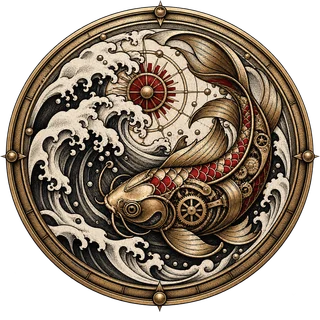
An old Chinese legend tells of a koi that swims up a waterfall at the Dragon Gate and is transformed into a dragon. That is why koi and dragons appear together so often: perseverance rewarded.
IVQuestions people ask
Is a dragon tattoo good luck?
In East Asian tradition, yes - dragons are protective and bring fortune and rain. In European tradition dragons are monsters, so a Western-style dragon reads differently.
What does a dragon and koi tattoo mean?
Perseverance and transformation: the koi that climbs the waterfall becomes a dragon.
Where does a dragon tattoo fit best?
Anywhere long: a sleeve, the leg, along the spine or across the back. A dragon squeezed into a small square loses its movement.