Guide · 15 designs
Hawaiian Tribal Tattoo Meanings: Kakau, Honu, Mano and Hibiscus
Traditional Hawaiian tattooing is called kakau. Its best-known symbols are the honu (sea turtle) for long life and good fortune, the mano (shark) for protection and strength, and rows of triangles - shark teeth - for protection and courage. Modern Hawaiian-inspired tattoos often add the hibiscus, the islands' flower, to the tribal bands.
IKakau and the guardians
Like elsewhere in Polynesia, kakau was tied to family, status and protection, and many designs were bold geometric bands in solid black. After the 19th century the practice nearly disappeared; since the Hawaiian cultural revival of the 1970s, Native Hawaiian practitioners have brought it back, some with traditional hand tools.
Many Hawaiian families have 'aumakua - ancestral guardian spirits that can appear as animals such as the shark, the owl or the turtle. A shark or turtle tattoo can therefore be deeply personal for a Hawaiian wearer. For a visitor, it is a symbol of the islands and of the qualities the animal stands for, and it is worth knowing the difference.
IIHonu, mano and flowers
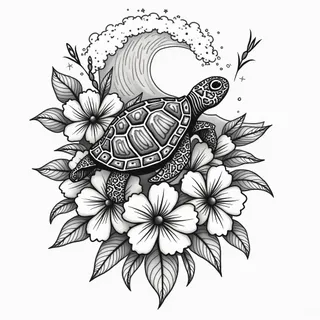 AI-generated
illustrativeHawaiian Tattoo Meanings & Symbols: A Guide to Aloha InkA turtle resting on plumeria-style flowers with a wave behind it - the most visited Hawaiian design on the site.
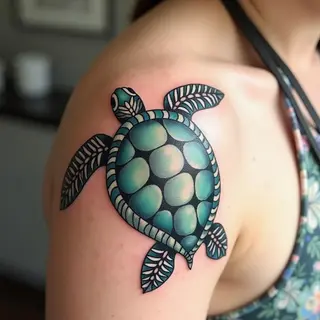 AI-generated
old-school · shoulderHawaiian Tattoo Meanings: A Guide to Culture & SymbolismA sea turtle on the shoulder, its shell filled with a teal pattern.
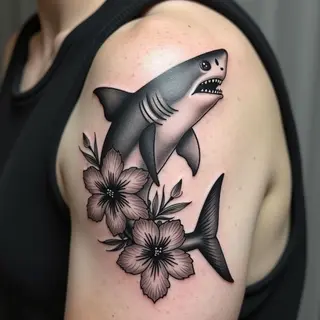 AI-generated
illustrativeHawaiian Tattoo Meanings & Symbols: A Cultural GuideA shark diving through hibiscus flowers: protection softened with the islands' flower.
IIITribal shoulders and arms
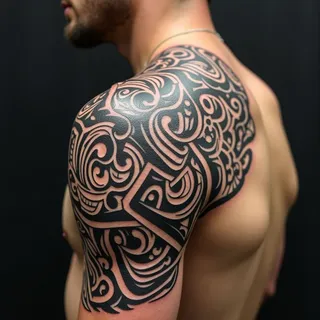
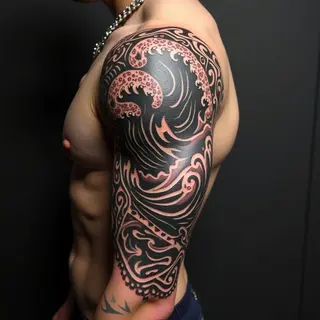
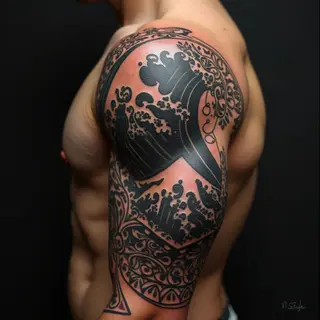
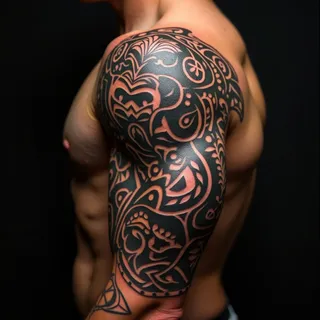
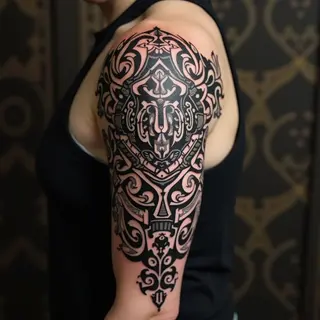
The tribal style here is heavy and geometric: solid black bands, shark-tooth rows and open curves following the shoulder.
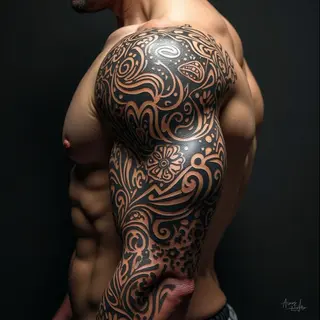 AI-generated
tribalWhat Do Polynesian Tribal Tattoos Mean?Shoulder and arm in dense black patterns with a bright skin line inside each shape.
 AI-generated
tribalTribal Tattoos: Exploring Family Love & Cultural SignificanceLarge black shapes over the shoulder cap - readable from a distance.
 AI-generated
tribal · armDecoding Polynesian Tattoo Designs and Their MeaningsCurling black forms wrapping the shoulder onto the chest.
 AI-generated
tribalPolynesian Tattoo Designs & Meanings: A Beginner's Guide
 AI-generated
tribal · armUnveiling Polynesian Tattoo Meanings & Designs: A Cultural Journey
 AI-generated
tribal · armHonoring Whānau: Family Tattoo Designs & Cultural SignificanceA vertical arrangement of bands and points on the upper arm.
 AI-generated
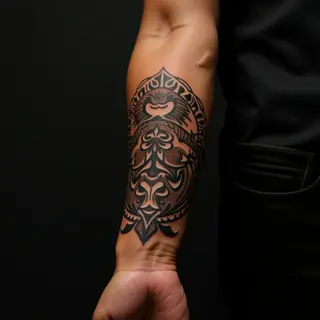
illustrative · forearmThe Meaning of Waves in Polynesian TattoosA forearm band of fine tribal fill.
IVBacks and legs
 AI-generated
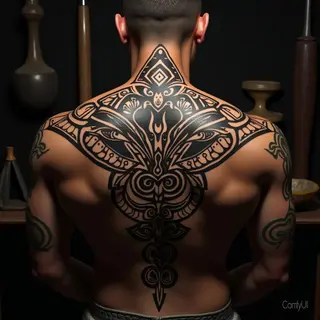
tribalThe Meaning of Samoan Tattoos: A Cultural ExplorationUpper back and shoulders, symmetrical around the spine.
 AI-generated
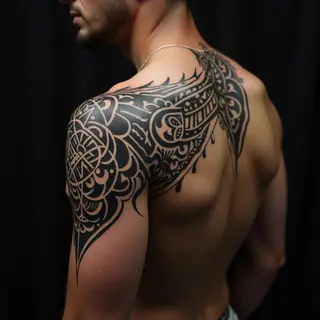
tribalTribal Tattoos: Respecting Culture, Understanding MeaningA pattern flowing from the shoulder blade over the shoulder.
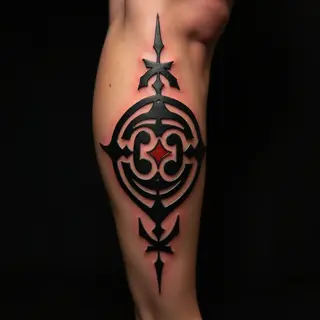 AI-generated
tribal · calfAncient Symbols & Meanings: Tribal Calf TattoosA calf piece centred on a single circular motif.
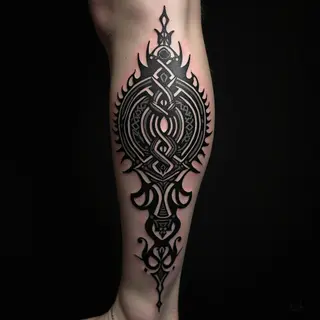 AI-generated
tribalTribal Tattoo Designs: A Journey Through Ancient MeaningsA long vertical design down the calf.
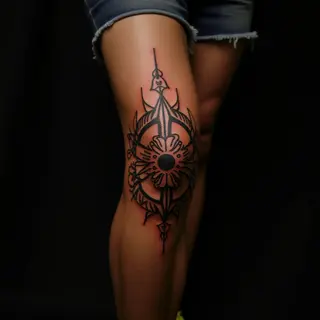 AI-generated
fine-line · kneeHawaiian Knee Tattoos: Ancient Symbols & Modern Fine-Line DesignsFine geometric work around the knee.
VQuestions people ask
What does a turtle tattoo mean in Hawaiian culture?
The honu stands for long life, good luck and safe navigation - turtles return to the same beaches across great distances. For some families it is also an 'aumakua, an ancestral guardian.
What is the difference between Hawaiian and Samoan tattoos?
Both come from the same Polynesian roots. Samoan work is famous for the dense pe'a and malu; Hawaiian kakau is known for bold geometric bands, and modern Hawaiian designs often add turtles, sharks and flowers.
Is it OK to get a Hawaiian tattoo as a visitor?
A Hawaiian-inspired design made for you is generally fine; ask a Native Hawaiian artist if you want something closer to kakau, and avoid copying someone's family design.